Check the edges. Real wood or solid plywood cabinetry has visible wood grain on exposed edges or edge-banding that matches the face. Particle board often shows a rough, chipboard texture at cut edges, sometimes covered with a thin strip of matching film that can peel over time.
Feel the weight. Solid wood and quality plywood cabinet boxes are noticeably heavier than particle board. If a cabinet door feels unusually light for its size, that's a signal.
Look at the drawer box construction. Low-end cabinets use particle board drawer boxes. Higher-quality builds use solid wood dovetail or box-joint construction. Pull a drawer all the way out if you can and inspect the corners.
Ask about the finish process. A factory-applied finish on a mass-produced cabinet is typically a thin UV-cured coating. A pre-finished cabinet from a shop like Prairie Winds Woodworking in the Kansas City area goes through a full sprayed conversion finish process, which results in a harder, more uniform surface that resists chipping and scratching better than most off-the-shelf options.
What Wood Species Should You Choose?
This is a question that comes up often, and the answer depends on your priorities.
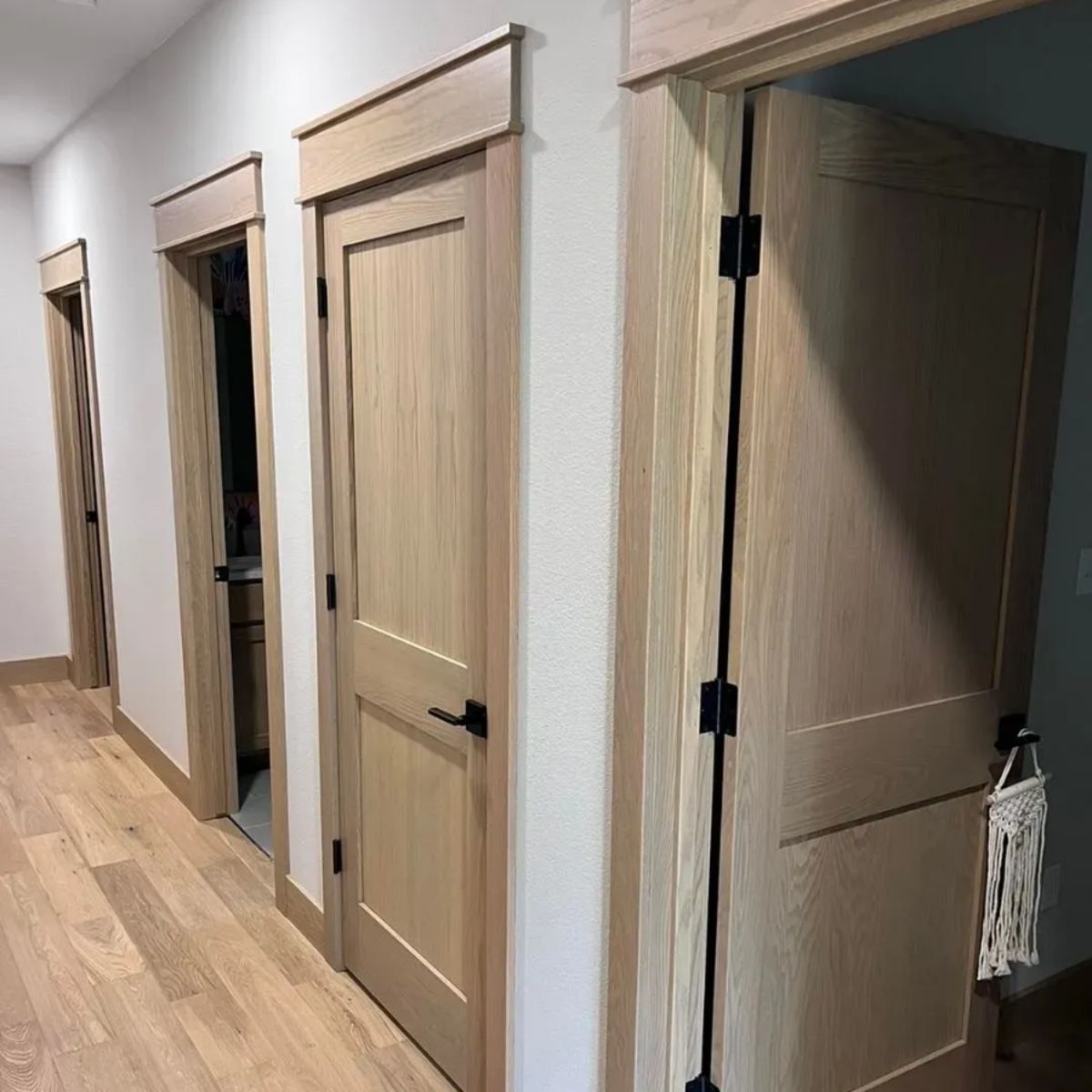
Oak is one of the most durable hardwoods and takes stain well, making it a strong choice if you want a traditional look with proven longevity. Its open grain pattern gives it a distinct character.
Maple has a tighter, more uniform grain that works well for painted finishes or lighter stains. It's very hard, which means it resists dents and scratches better than softer species.
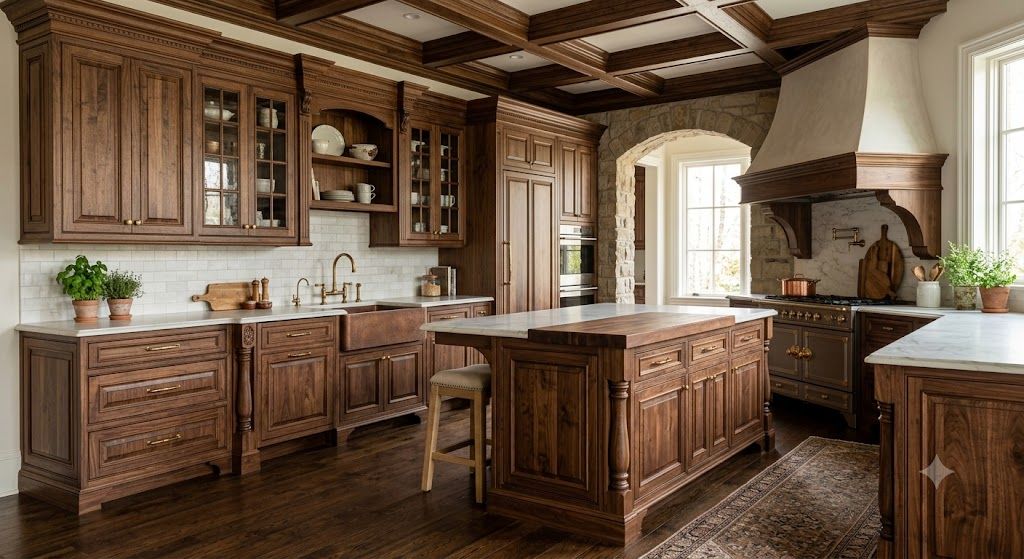
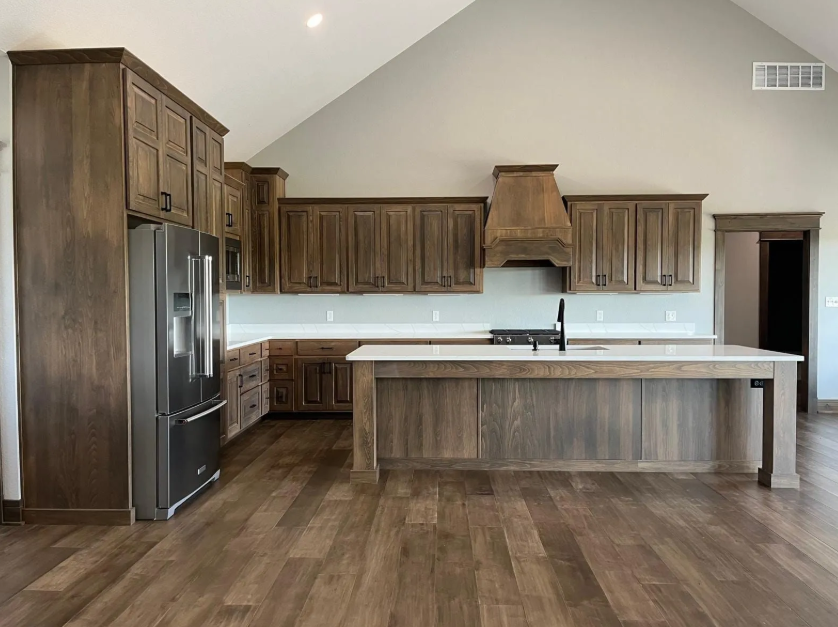
Walnut is a premium option with a rich, dark tone that many homeowners in the Leawood and Overland Park area are drawn to. It's slightly softer than maple but still far more durable than any engineered alternative, and it ages beautifully.
Hickory is the most rugged of the common cabinet species. It has extreme hardness and a bold, varied grain that gives it a distinctive look. It's harder to finish evenly, so it's worth working with someone who has real experience with it.
The right species depends on your design goals, your finish preference, and how the space is used. A skilled cabinet maker can walk you through those tradeoffs based on your specific situation.
What About Cost? Is Real Wood Worth the Price Difference?
This is where the math matters. A particle board cabinet might cost significantly less upfront. But if it needs replacement in eight to ten years, you're paying for installation twice, paying for disposal, and spending time on a disruption you could have avoided.
Real wood cabinetry, properly built and finished, commonly lasts thirty or more years with basic care. Many kitchens in older Kansas City homes still have original wood cabinets that simply needed refinishing rather than replacement. That refinishing option is itself a major advantage. Real wood can be sanded and recoated when it starts to look dated. Melamine and particle board can't. Once the surface is worn or damaged, the only path is replacement.
When you factor in longevity, refinishing potential, and the resale value that quality cabinetry adds to a home, the cost gap narrows considerably.
FAQ
How long do real wood cabinets typically last?
With proper construction and a quality finish, real wood cabinets can last thirty to fifty years or more. Much depends on the finish applied, the hardware used, and how the cabinets are maintained. Pre-finished cabinets from a professional shop are generally more durable than site-painted alternatives because the finish is applied and cured under controlled conditions.
Is plywood a good alternative to solid wood for cabinet boxes?
Yes. Quality cabinet construction often uses hardwood plywood for the box structure and solid wood for doors and face frames. Plywood holds screws well, resists moisture better than particle board, and is dimensionally stable. What to avoid is the combination of particle board boxes with a laminate surface, which is common in budget cabinetry.
Can I refinish real wood cabinets instead of replacing them?
Yes, and this is one of the biggest advantages of real wood. If your cabinets are structurally sound but the finish looks worn or outdated, a professional refinish can restore them at a fraction of the cost of replacement. This option simply does not exist with melamine or particle board.
What's the difference between pre-finished and site-finished cabinets?
Pre-finished cabinets are coated in a controlled shop environment before installation. Site-finished cabinets are painted or stained after they're installed in your home. Shop finishing produces a harder, more consistent result because the conditions are controlled. It also means no painting mess in your home and no waiting for finishes to cure after installation.
Do real wood cabinets require special maintenance?
Not really. Regular cleaning with a damp cloth and mild soap is sufficient for day-to-day care. Avoid soaking the wood or using harsh chemical cleaners near joints and edges. In very dry climates or during winter months with low humidity, the wood may contract slightly, which is normal. It won't affect performance.
Conclusion
Choosing real wood cabinets over melamine or particle board comes down to one thing: how long you want them to last. Engineered materials are built for short-term budgets. Real wood is built for real life, and with the right craftsmanship behind it, it shows. If you're planning a kitchen remodel or new build in the Kansas City area, Prairie Winds Woodworking specializes in 100% real wood cabinetry, built and pre-finished in-house, and professionally installed. No particle board, no melamine, no shortcuts. Contact us through our website.